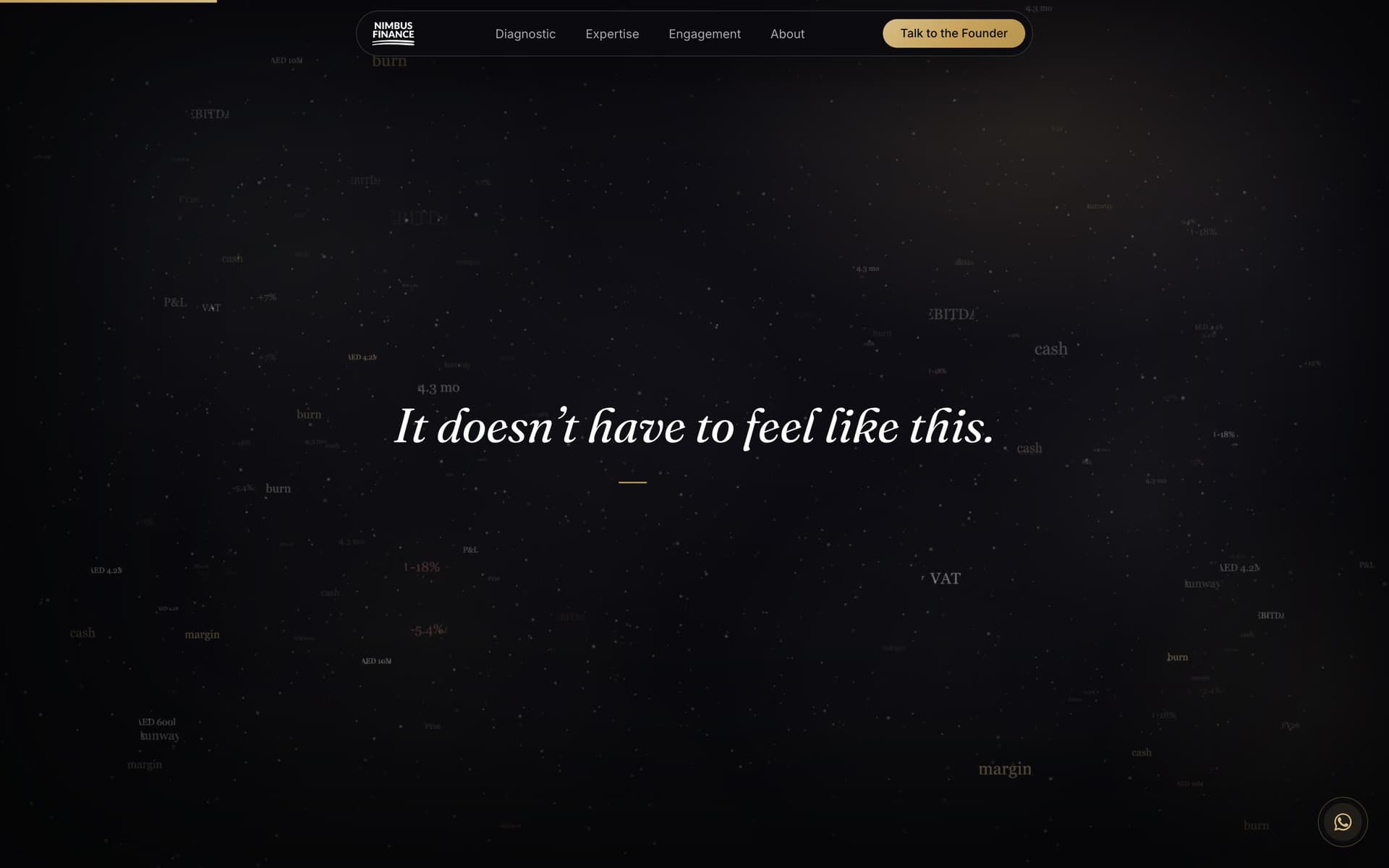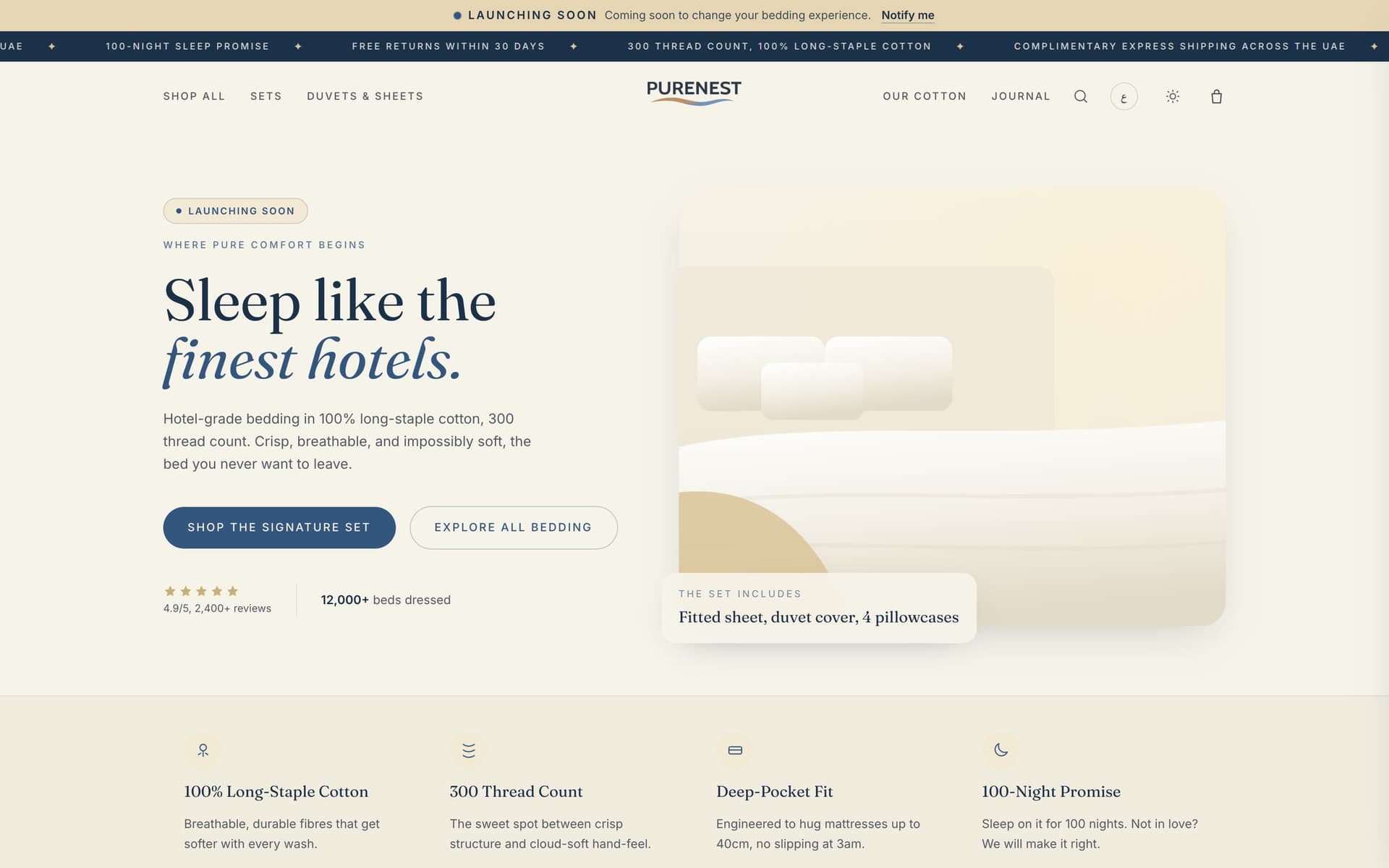
PureNest is a luxury bedding brand entering the UAE. The brief was short and exact: a storefront with the calm of a well-made bed, warm, quiet and effortless, and equally at home in English and Arabic. Not a theme with the logo swapped. A place that feels the way the product feels.
That brief rules out most of what an off-the-shelf store can do. Themes are built to arrange blocks; PureNest needed the blocks designed around one product category and two languages, with a night mode that a sleep brand can actually use. So we designed and built the whole experience from scratch, headless on Next.js with the Shopify Storefront API, and launched it in a polished coming-soon mode wired to switch on live selling the moment the brand is ready.
The problem with selling sleep from a template
Bedding is a considered purchase. People compare thread counts, fills, sizes and care instructions, and they do it slowly, often at night, often on a phone. A template storefront treats every product the same way: a grid, a price, a button. It does not know that a duvet page should feel different from a pillow page, that Arabic readers need a layout mirrored properly rather than flipped, or that the same page should feel warm at midday and dim at midnight.
For a brand whose entire promise is calm, that mismatch is not cosmetic. It is the first thing a customer feels.
What we built
A complete storefront on Shopify's backbone
Shopify stays exactly where it is strongest: products, inventory, checkout and orders. Everything the customer sees is a custom Next.js storefront reading from the Storefront API. That gave us a complete catalogue, product pages designed around fabric and fill rather than a generic spec table, and a slide-out cart that keeps the customer on the page they were reading. The PureNest team keeps working in the Shopify admin they know.
Arabic as a first-class experience
The site is bilingual with a true right-to-left layout: typography, spacing, iconography and navigation all re-composed for Arabic, not mirrored by a switch. Product copy exists in both languages. A customer in Dubai can move between the two without the layout breaking or the tone changing.
A warm day-and-night mode
Most dark modes are a developer convenience. PureNest's night mode is part of the product: a warm, low-contrast palette that feels like a bedside lamp rather than a dashboard, because the customer most likely to buy bedding at 11 pm is lying on the old bedding they want to replace.
Launch-ready, in stages
The store launched in a considered coming-soon mode: the brand, the story and the catalogue are live, and the switch to live Shopify selling is one setting away. A brand entering a new market gets to build its audience before it takes its first order, without a second build later.
The stack
- Next.js 14 storefront on Vercel
- Shopify Storefront API for catalogue, cart and checkout
- Bilingual English and Arabic with a true right-to-left layout
- Day and night mode designed for the brand, not inherited from the OS
- Server-rendered pages, so every product is readable by search engines and AI assistants from the first crawl
Why headless, again
This is the same decision that multiplied Oleum Crete's monthly sales eighteen times: keep Shopify for what it is best at, and put a storefront designed around the product in front of it. For PureNest the product is calm, and calm is not something a theme ships with.
See the work at the PureNest case study, or read about how we build headless Shopify storefronts.